
· 4 min read
What to actually look at when you visit a nursery
Every nursery looks lovely on a tour. Here is what is worth noticing instead, including the questions that are hard for us to answer well and are therefore the most useful ones to ask.
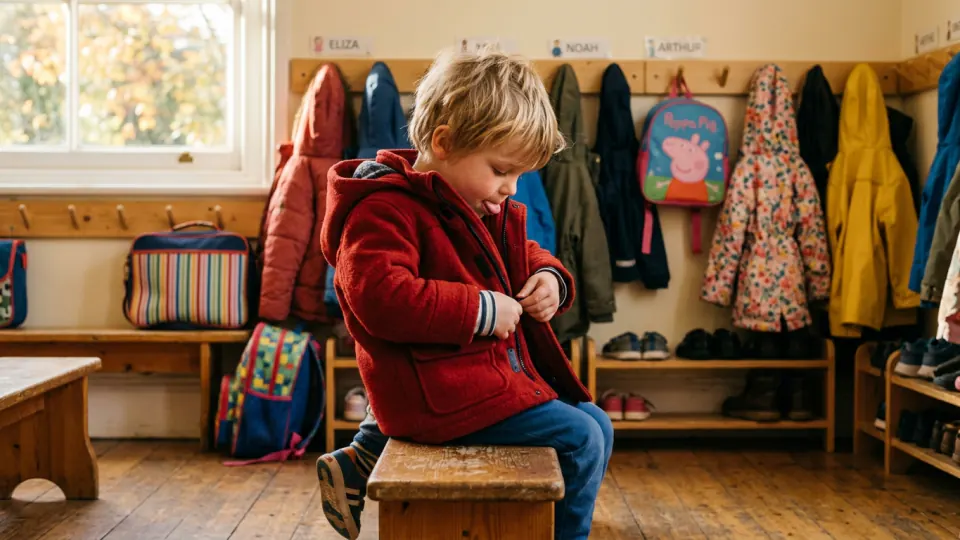
We are writing this knowing perfectly well that you might use it on us. That is the point. If a nursery cannot stand up to the questions below, you should know that before you hand over your child, and if we cannot, you should know that too.
Go when the children are there
A tour at half past four, when the room has been tidied and eight children are waiting to be collected, tells you almost nothing. Ask to come mid-morning on an ordinary day. If a setting will only show you the building when it is quiet, that is itself an answer.
Once you are in, stop listening to whoever is showing you round for a minute and just watch the room.
What is worth noticing
- How long children stay with one thing. A room where nobody settles at anything for more than four minutes is a room where something is interrupting them, usually the timetable.
- What the adults are doing with their bodies. Down at child height and quiet is a good sign. Standing in the middle directing traffic is a different kind of room, and not automatically a worse one, but you should know which you are buying.
- Whether children can get things themselves. Are the materials within reach, or on a high shelf that needs an adult? A child who has to ask for everything learns to ask for everything.
- What happens when something spills. This is the single most revealing thing you can see. Watch whether an adult sweeps in and fixes it, or whether the child is shown where the cloth is kept.
- The noise. Not whether it is loud or quiet, but what kind. Busy hum is good. So is deep silence. Sharp, shrieky, escalating noise that nobody is addressing is worth asking about.
- Whether anyone knows the children's names without checking.
Questions that are hard to answer well
Anyone can answer "what is your ratio" and "do you take funded hours". These are the ones that actually separate settings, and we have put them here even though some of them are uncomfortable for us too.
- How long have your staff been here? Turnover is the thing that matters most and is discussed least. A child forms an attachment to a person, not to a building, and losing that person twice in a year undoes a great deal. Ask how long the longest-serving member of staff has been there, and the newest.
- Who exactly will know my child? Ask for the key person system in detail. What happens on that person's day off. What happens if they leave.
- Tell me about a time a child was unhappy here for weeks. Every setting has had one. A nursery that cannot think of an example is either not paying attention or is not going to be straight with you.
- What do you do when a child bites? You are not asking about biting. You are asking whether the answer is about punishment or about working out what the child was trying to say.
- What will you tell me at the end of the day? Push past "we will let you know how they got on". Ask whether you will hear about the bad days.
- What are you not good at? The answer matters much less than whether there is one.
The paperwork, briefly
Read the most recent Ofsted report rather than the grade on the banner outside. The grade is one word from one visit, sometimes years old. The report tells you what the inspector actually saw, and a setting with a Good and a specific, addressed weakness is often a safer bet than an Outstanding from 2019.
Ask what has changed since the inspection. If the manager has changed, the report describes a different place.
Then ignore most of this and notice how you feel
Parents are usually right about this and then talk themselves out of it. If you left a setting with a flat feeling you could not explain, that is data. If you found yourself imagining your child at a particular table, that is data too.
You are not choosing a curriculum. You are choosing the people who will pick your child up when they fall over.
And on us
We would rather you came with this list than without it. Ask us all of it. Come on an ordinary Tuesday morning between half past nine and half past eleven, which is when there is genuinely something to see, and if we are not right for your child we will say so.
Ask for a visit here, or ring us on 07714 821940.
If any of that sounded like what you want for your child, come and see whether we manage it in practice.
Request a visit